Mugshot Removal Laws by State: What Florida, Georgia and Texas Require Websites to Do

Several states have passed laws aimed at websites that publish booking photos and charge to take them down. The laws do not make mugshots private. They do two narrower things: they bar publishers from charging a removal fee, and in some states they set a deadline to remove a photo after a written request. Florida gives a publisher 10 days. Georgia gives 30 days in eight listed situations. Texas requires businesses that publish criminal record information to keep it accurate and to investigate a dispute. A Florida Senate staff analysis in 2021 counted fourteen states with legislation of this kind.
Key takeaways
- State laws target the removal-fee business model, not the existence of the booking photo.
- Florida: no fee, removal within 10 days of a written request, and a court can order the photo down.
- Georgia: free removal within 30 days of a written request if you fit one of eight circumstances.
- Texas: a duty to publish complete and accurate criminal record information, a dispute process and civil penalties.
- Removal from the site does not update Google. That is a separate step.
What do state mugshot removal laws actually do?
Booking photos are generally public records, so a website can usually republish them. What legislatures went after is the practice of charging the person in the photo to remove it. Most statutes share three parts: a ban on soliciting or accepting payment for removal, a written-request procedure with a deadline, and an enforcement route through a court or the state attorney general. This guide is general information, not legal advice. An attorney in your state can tell you how a statute applies to your record.
Which states have mugshot removal laws?
| State | Law | Fee for removal | Deadline after written request | Enforcement |
|---|---|---|---|---|
| Florida | Fla. Stat. 901.43 | Prohibited | 10 days | Civil action to stop publication, and a civil penalty added in 2021 for certain publishers |
| Georgia | O.C.G.A. 10-1-393.5 | Prohibited | 30 days, in eight listed circumstances | Fair Business Practices Act, through the Attorney General’s Consumer Protection Division |
| Texas | Business and Commerce Code, Chapter 109 | Not addressed in this summary | Dispute investigated within 45 business days | Civil penalty of up to $500 for each separate violation |
What does Florida law require?
Florida’s statute on the dissemination of arrest booking photographs says a person or entity in the business of publishing booking photos may not solicit or accept a fee or other payment to remove them. After a written request, the publisher must remove the photo within 10 days, without charge. If it does not, the person can bring a civil action to stop the continued publication. A 2021 amendment set the deadline at 10 calendar days after receipt of the written request and added a civil penalty for publishers whose primary business model is publishing booking photos for commercial gain.
What does Georgia law require?
The Georgia Attorney General’s Consumer Protection Division explains that O.C.G.A. 10-1-393.5 lists eight circumstances in which a commercial website must remove a person’s mugshot at no charge, within 30 days of the date the person sends a written request. The first is that access to the case or charges was restricted under specific code sections. A company that misses the 30 days, or tries to charge for removal, violates Georgia’s Fair Business Practices Act, and complaints go to the Consumer Protection Division.
What does Texas law require?
Chapter 109 of the Texas Business and Commerce Code applies to business entities that publish criminal record information, and its definition covers a photograph taken pursuant to an arrest. The chapter imposes a duty to publish complete and accurate information. When the subject disputes a record, the business must verify it and finish its investigation no later than the 45th business day after it receives notice, and promptly fix or remove what is incomplete or inaccurate. A separate section prohibits publishing certain criminal record information altogether. A business that violates the chapter is liable to the state for a civil penalty of up to $500 for each separate violation.
What about South Carolina, North Carolina, Illinois, Alabama, Arkansas and Louisiana?
This guide covers three statutes in detail because their text and the regulators’ own explanations could be checked line by line. Other states have passed or debated their own rules on booking photos, and they differ on who is covered, whether a request must be in writing and how the law is enforced. If your record is from South Carolina, North Carolina, Illinois, Alabama, Arkansas, Louisiana or any state not in the table, two offices can tell you what applies: the consumer protection division of the state attorney general, and the clerk of the court that handled the case, who can point you to the forms for sealing and expungement. A mugshot removal attorney or lawyer is worth the fee when a publisher ignores a statutory deadline, because enforcement runs through the courts.
How do you send a written removal request?
- Collect the exact URL of every page that shows the photo.
- Identify yourself and the record: full name, booking date, arresting agency and county.
- Cite the statute for your state and, where the law lists qualifying circumstances, state which one applies and attach the document that proves it, such as a dismissal, an expungement order or a record restriction.
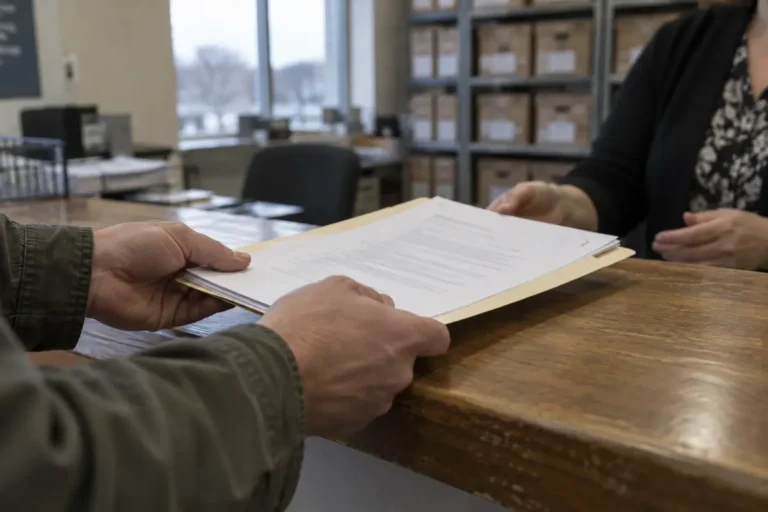
- Send it in writing to the publisher’s listed contact and keep proof of the date. The deadline runs from the request.
- Do not pay a fee to the publisher. In states with these laws, charging one is the violation.
- If the deadline passes, the next step is the enforcement route in the table above, which is a matter for an attorney or the state attorney general’s office.
What if your state has no law, or the site ignores it?
Many mugshot sites operate from outside the state whose records they publish, and a statute is only as useful as your ability to enforce it. The practical routes are the same everywhere: removal at the source, de-indexing from Google, and suppression. Our guide on how to remove a mugshot or arrest record from Google walks through them, and the mugshot removal service page lists the sites we handle, including Mugshots.zone, Arrests.org, BustedNewspaper and The Georgia Gazette. Once a page is gone, clear the old result with Google’s Refresh Outdated Content tool. For the court file behind the arrest, see how to remove court records from the internet.
Where Viral Spike Marketing fits
Viral Spike Marketing is a national digital PR agency, not a law firm, and nothing here is legal advice. Our reputation work covers Google delisting, article deletion, and removal of links, posts or profiles, and it can’t be traced back to the client or Viral Spike. Mugshot removal typically takes 72 hours to three weeks. Every service is guaranteed in writing or a full refund, and quotes are private. Send the links through the inquiry form to get a free quote, or see all PR and reputation management services.
Frequently asked questions
Is it illegal for a website to charge for mugshot removal?
In states with mugshot laws, yes. Florida and Georgia both prohibit publishers from charging a fee to remove a booking photo. Whether a law applies depends on the state and the publisher.
What is the Florida mugshot removal law?
Fla. Stat. 901.43. Publishers of booking photos may not solicit or accept a fee for removal and must remove a photo within 10 days of a written request, without charge.
What is the Georgia mugshot removal law?
O.C.G.A. 10-1-393.5. A commercial website must remove a mugshot at no charge within 30 days of a written request if the person fits one of eight listed circumstances.
What is the Texas mugshot removal law?
Chapter 109 of the Texas Business and Commerce Code. It requires businesses that publish criminal record information to keep it complete and accurate, sets a dispute process and provides civil penalties of up to $500 for each separate violation.
Do I need a lawyer to remove a mugshot?
Not to send a written request. You may need one to enforce a statute in court, or to seal or expunge the underlying record, which is the strongest basis for any removal.
Does removing a mugshot from a website remove it from Google?
Not immediately. Google keeps its own copy until it is refreshed. After the page is gone, request an update with the Refresh Outdated Content tool.
Do I need a mugshot removal attorney?
Not for the written request itself. A mugshot removal attorney or lawyer becomes useful when a publisher ignores a statutory deadline, or when the underlying record can be sealed or expunged.